

Independent Rankings and Global Keynote Demand Converge Around Roger Spitz’s Work on AI & the Future of Decision-Making
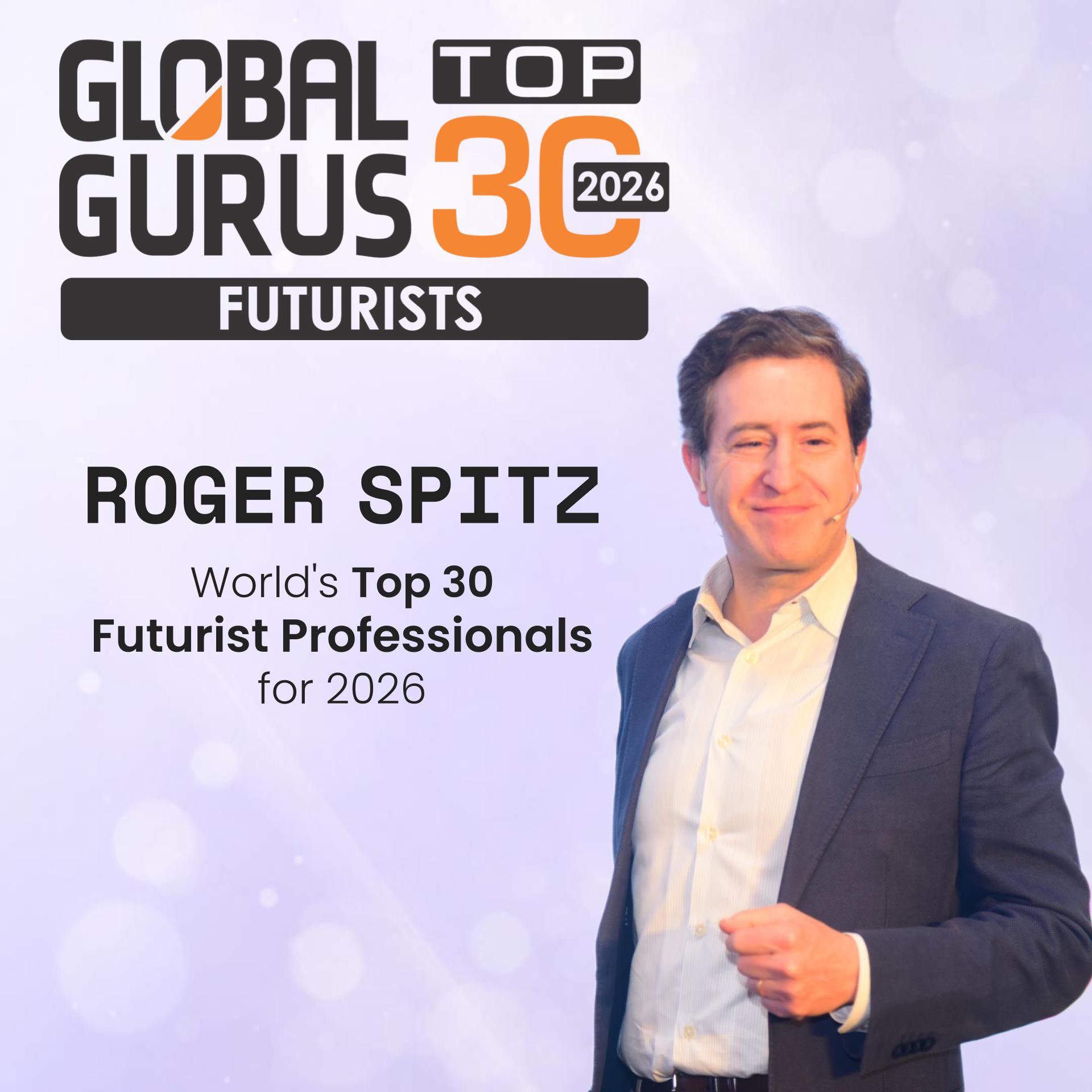
Roger Spitz - World's Top 30 Professional Futurists (Global Gurus)
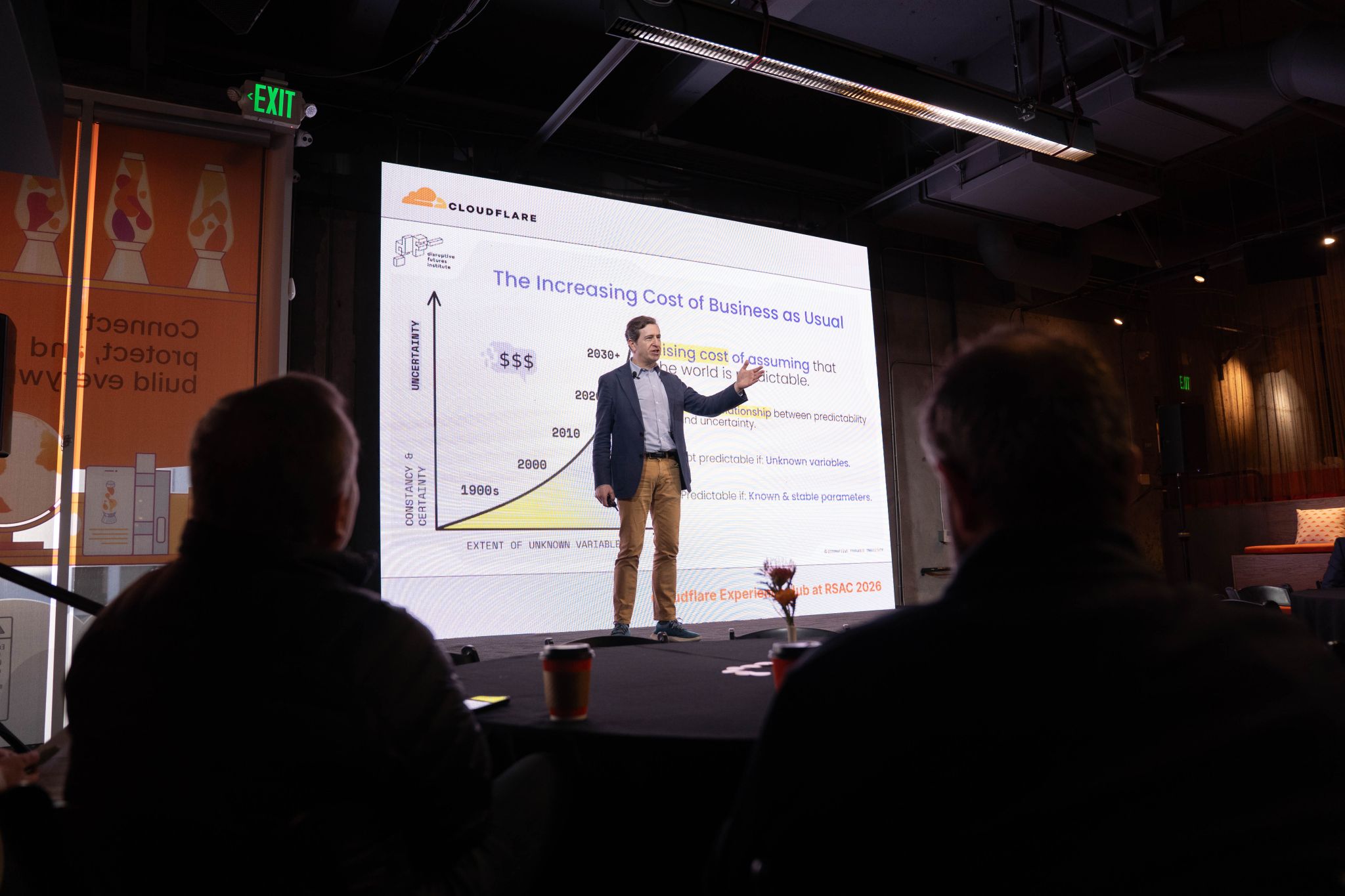
Roger Spitz Headline Keynote @ Cloudflare Trust Forward Summit (San Francisco, 2026)
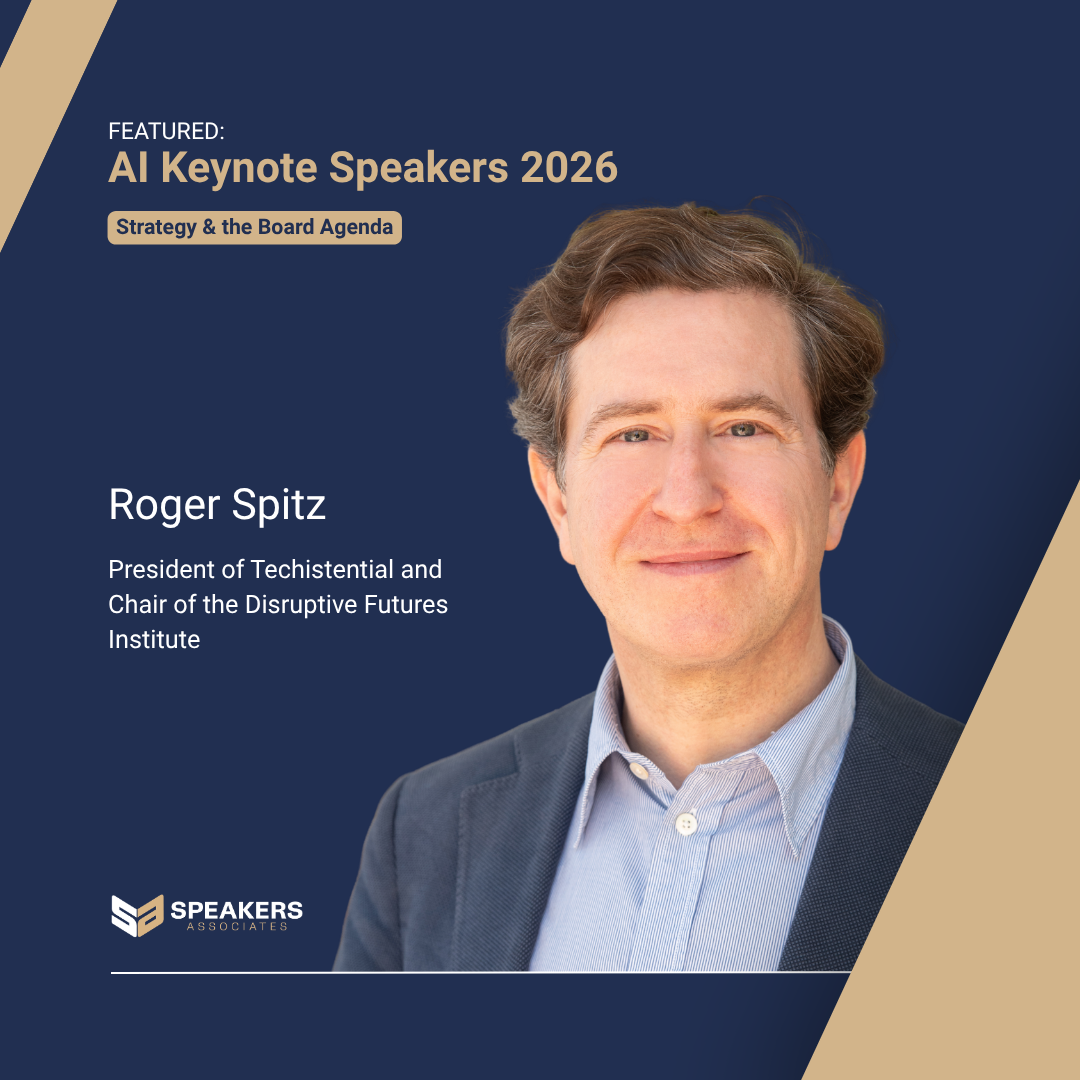
Roger Spitz Leading AI Keynote Speaker
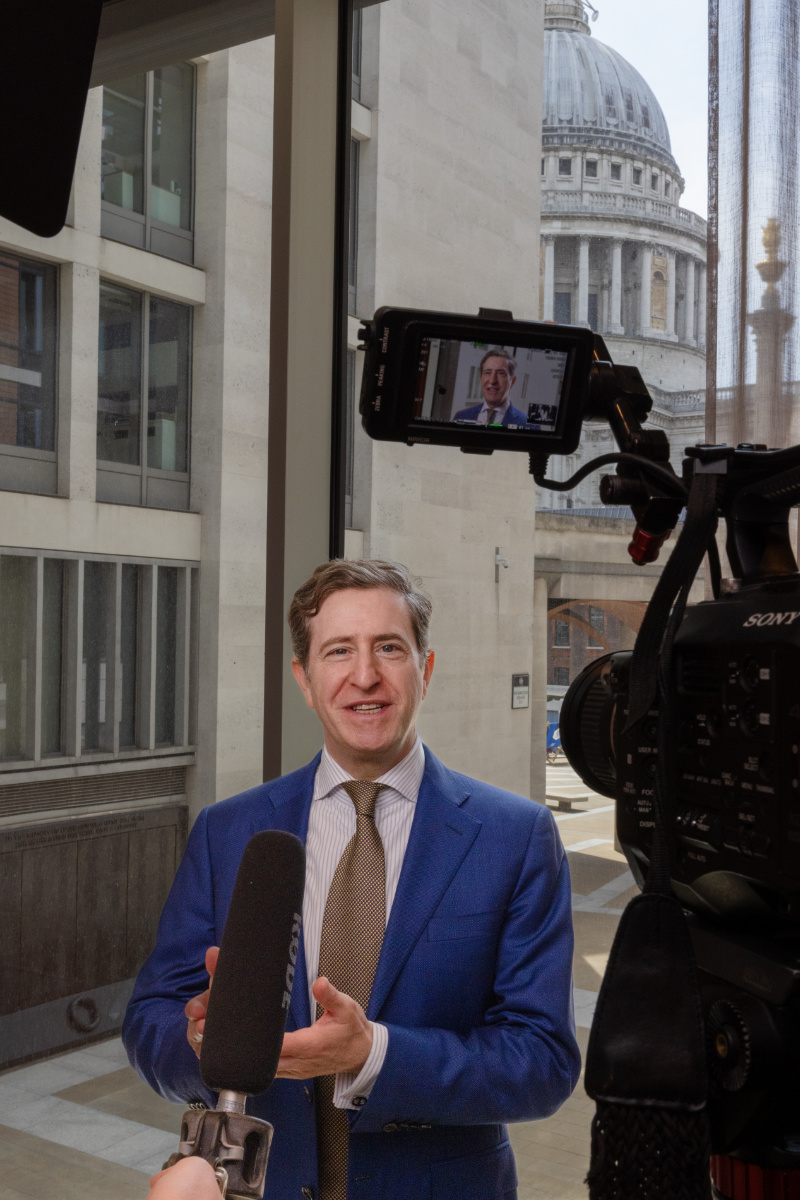
TV Interview - Roger Spitz Media Tour (London)
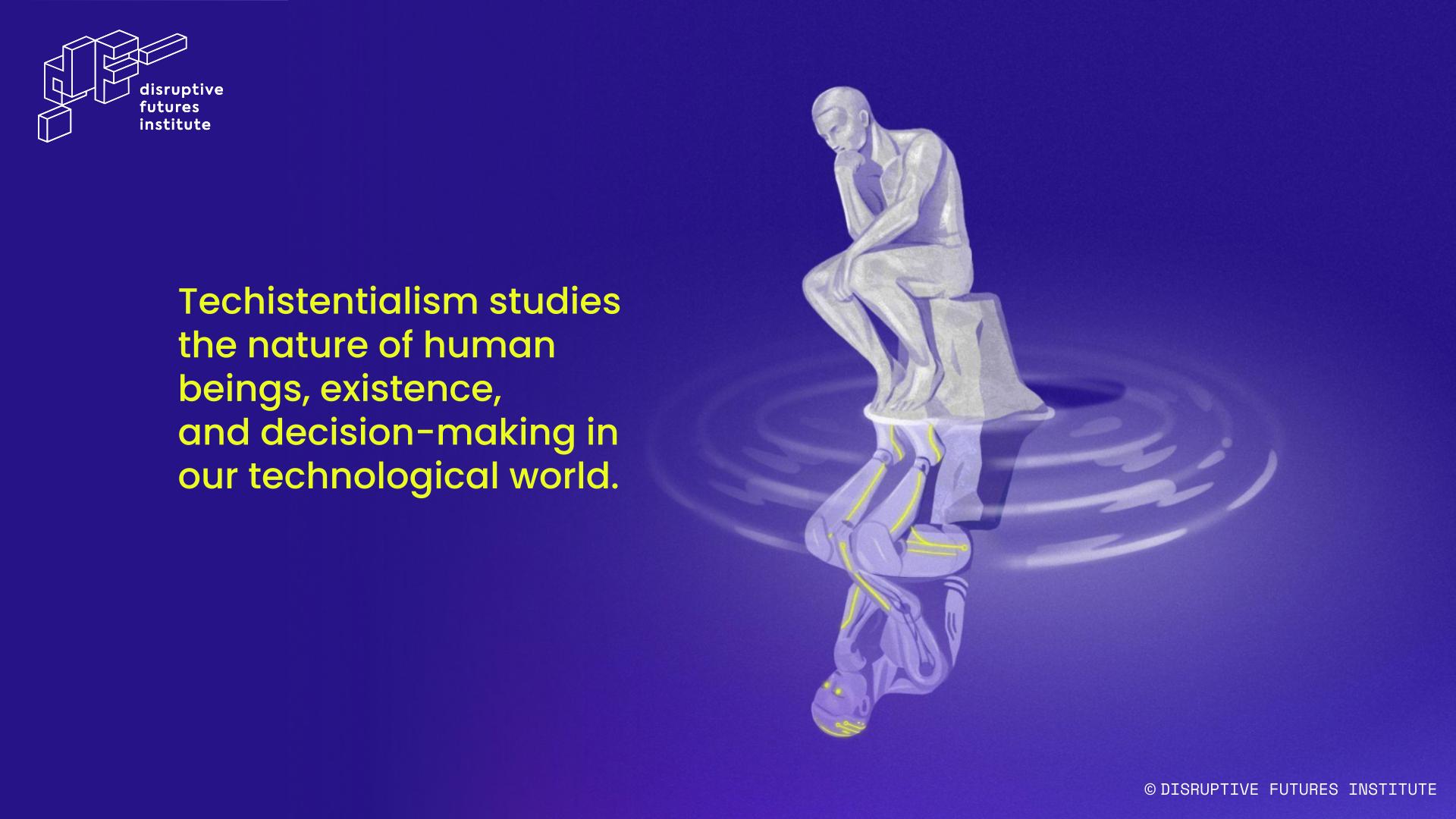
Techistentialism Definition, Roger Spitz @ Disruptive Futures Institute
Global Gurus places Spitz among the World’s Top Futurists; his Disruptive Futures Institute named to Thinkers360’s 50 Thought Leading Companies on AI
SAN FRANCISCO, CA, UNITED STATES, June 27, 2026 /EINPresswire.com/ -- The Disruptive Futures Institute (DFI) today pointed to a run of recognition that has gathered around its founder, Roger Spitz, whose work on artificial intelligence and the future of human decision-making has moved from specialist audiences into far wider circulation. Over the first half of the year, Spitz has been named to Global Gurus’ World’s Top 30 Futurist Professionals; the Disruptive Futures Institute has been listed among Thinkers360’s 50 Thought Leading Companies on Artificial Intelligence for 2026, alongside TCS, Mastercard and ServiceNow; and demand for his keynotes has carried him through a global tour spanning the world’s financial and technology capitals — from San Francisco’s summit season to London, across Europe, India, and Asia.
There is a pattern underneath the individual items. As organizations move from experimenting with AI to running it, they increasingly want frameworks that address what the technology changes about judgment, governance, and human agency — not only productivity. That is the ground Spitz has worked since 2016. Much of this year’s recognition reflects how many others have since arrived at the same set of questions.
The Rankings: Independent Validation, Not Self-Description
Spitz’s 2026 standing rests on third-party rankings that weigh original ideas and measurable influence rather than follower counts. In February, Global Gurus named him #15 on its World’s Top 30 Futurist Professionals ranking for 2026, placing him among a cohort that includes Ray Kurzweil, Peter Diamandis, and Michio Kaku. Global Gurus weights its selection across public voting, originality of ideas, practical impact, and published reach — criteria under which Spitz’s coining of Metaruptions, Techistentialism, and his AAA Framework (Antifragile, Anticipatory, Agile) score on substance rather than visibility alone.
The institutional signal is just as telling. The Disruptive Futures Institute was named to Thinkers360’s 50 Thought Leading Companies on Artificial Intelligence for 2026 — a list on which a San Francisco research institute sits beside Tata Consultancy Services, Mastercard, ServiceNow, Orange Business, Volvo Group, and Oxford’s Saïd Business School. Separately, Thinkers360’s annual company rankings placed DFI among the Top 50 for Innovation and within the Top 10 globally for Education (ranked #9). For a relatively new organization of the Disruptive Futures Institute’s scale to share a leaderboard with companies of that size is a useful signal: its frameworks are being used, cited, and built on at institutional weight.
Across Thinkers360’s individual leaderboards, Spitz has been recognized as a Top Voice both globally and in North America, with top-tier placements spanning Management, Education, Venture Capital, and Emerging Technologies, and standing among the leading thought leaders in Artificial Intelligence, AI Ethics, and AI Governance. The through-line is consistency: the recognition is not confined to one list or one season, and it now reaches specifically into AI.
“Rankings are a lagging indicator,” said Spitz, Chair of the Disruptive Futures Institute. “They tell you the work has already landed somewhere. What matters is why boards and policymakers are asking these questions now — because the cost of getting human-AI decision-making wrong has stopped being theoretical.”
Why the AI Conversation Came to Him
In April 2026, Spitz was one of the experts featured in the Elon University Imagining the Digital Future Center’s report, Building a Human Resilience Infrastructure for the AI Age. His contribution argued that the gravest near-term risk of AI may not be machines becoming too intelligent, but humans becoming dangerously reliant on systems they no longer understand — a condition he calls Superstupidity. The essay placed his work alongside contributions from figures including internet pioneer Vint Cerf, Python creator Guido van Rossum, and forecaster Paul Saffo.
The idea traveled. GovTech headlined its coverage on the finding that the greatest AI risk may be “superstupidity.” Forbes drew on the concept to examine how organizational judgment erodes when AI starts making the calls. It shifted a debate that had fixated on superintelligence toward a more immediate question for executives: what happens to a company when its people get more comfortable validating outputs than interrogating them?
That helps explain why the recognition is clustering now. Spitz’s AI work does not chase the model-of-the-week. It asks a harder, more durable question — what AI does to the human capacity to decide — and gives boards a vocabulary for governing it. Increasingly, organizers invite him to address AI and leadership specifically, rather than the broader futures brief.
Keynote Demand: A Global Tour, and a Place on the AI Speaker Shortlist
Demand for Spitz’s technology keynotes has run high through 2026, and the stages are increasingly AI ones. In June he delivered a keynote at Meta’s Conversations 2026 in London, the company’s annual conference on AI-enabled business messaging. Earlier in the year he keynoted at the RSA Conference 2026 in San Francisco and at Cloudflare’s Trust Forward Summit, where his “Leading Beyond Certainty” talk addressed decision-making as AI, quantum, and cyber risk converge.
His flagship Visionary Trilogy — three standalone keynotes on the mindset, intelligence, and leadership shifts the AI era demands — anchors a tour that has run through the financial capitals, among them Frankfurt, Geneva, Zurich, New York, and London. Recent summits also include MIT Technology Review’s EmTech, NASSCOM’s summit in Bengaluru, and the Distinguished Leadership and Innovation Conference hosted by Trinidad’s Arthur Lok Jack Global School of Business. The Disruptive Futures Institute reports close to 1,000 keynotes delivered across over 40 countries and six continents over the life of Spitz’s work.
The recognition has also reached the people who do the booking. Spitz was featured in Speakers Associates’ 2026 buyer’s guide to AI keynote speakers — How to Choose an AI Keynote Speaker for Your 2026 Event — placed in the guide’s “AI strategy and the board agenda” section, alongside names such as Cassie Kozyrkov, Daniel Susskind, and Sol Rashidi. The guide singles out his rare combination: an operator who ran technology M&A at scale and then did the strategic-foresight academic work, built for boards revisiting their planning assumptions under accelerating and systemic disruption.
What event teams are buying is the practitioner grounding. Before founding the Disruptive Futures Institute, Spitz was Global Head of Technology M&A at BNP Paribas, where he led more than 50 transactions worth over $25 billion and built the bank’s U.S. M&A platform in San Francisco. That history is why his read on AI lands with capital allocators and technologists alike: he has sat on both sides of the table where these decisions get priced.
The Body of Work Behind the Recognition
The rankings track a published body of work. Spitz is the author of the multi-award-winning Disrupt With Impact (Kogan Page) and the four-volume Definitive Guide to Thriving on Disruption. Disrupt With Impact won first place in Business & Enterprise Non-Fiction at the 2024 Chanticleer International Book Awards (Harvey Chute), the Foreword INDIES award in Business & Economics, and a 2025 Readers’ Favorite award — and reached #1 on Amazon across six categories, including Artificial Intelligence, in the USA, UK, Brazil, India, France, and Germany.
Spitz’s AI work is anchored in Techistentialism — the framework he coined in 2016 examining decision-making in a world where technology and human life are inseparable — and extends through the Techistential Center for Human & Artificial Intelligence, DFI’s research and education initiative on AI’s impacts, governance, and ethics. Spitz holds roles spanning the World Economic Forum’s AI Global Alliance on AI Governance, the AI Council of the Indian Society for Artificial Intelligence, and the Global Centre for AI Excellence in San Francisco. He is a venture partner at Berkeley SkyDeck and Vektor Partners, investing in AI and deep-tech startups, and an AI columnist for MIT Technology Review Brazil.
“We built the institute to be useful when the map runs out,” Spitz said. “The organizations doing well with AI are not the ones with the most tools or the most data. They are the ones that kept their people genuinely in the loop — able to question, challenge, and override — at the moments that actually matter.”
From Diagnosis to Defense
Spitz has put the same conviction at the center of his work since 2016: while algorithms can calculate the probable, only humans can invent the impossible. As AI becomes part of everyday judgment inside organizations, the Disruptive Futures Institute’s work keeps returning to one practical question — how to preserve human agency when intelligent systems are in the room. The recognition gathering this year suggests that question is moving from the edge of boardroom and policy debates toward their center.
For media inquiries, interview requests, and keynote engagements:
• Explore: https://www.disruptivefutures.org/speaking
###
APPENDIX: MEDIA BRIEFING NOTES TO EDITORS
I. Rankings, Recognition & Benchmarking
Futurist & Foresight
• #15 Global Futurist Professional — Global Gurus, World’s Top 30 Futurist Professionals 2026 (announced February 2026). Cohort includes Ray Kurzweil, Peter Diamandis, and Michio Kaku. Selection criteria: Public Opinion (30%), Originality of Ideas (30%), Impact & Practicality (20%), Presentation & Publication (20%).
• Selected Top 30 Global Gurus to Follow in 2026, highlighting the most influential thought leaders shaping leadership, business, and professional development worldwide.
• Consistently ranked among the world’s top futurists (Global Gurus) across multiple cycles.
Artificial Intelligence — Institutional
• Disruptive Futures Institute named to Thinkers360’s 50 Thought Leading Companies on Artificial Intelligence 2026 (published May 2026; alphabetical list, no individual rank). Co-listed organizations include Tata Consultancy Services, Mastercard, ServiceNow, Orange Business, Volvo Group, Project Management Institute, and Saïd Business School, University of Oxford.
• Disruptive Futures Institute named to Thinkers360’s Top 50 Thought Leading Companies on Innovation 2026 and Top 10 in Education (#9 globally). Innovation co-listing includes EY, HCLTech, Mastercard, ServiceNow, and TCS.
Thinkers360 — Individual Leaderboards
• Top Voice — globally and North America.
• Top 10 — Management, Education, National Security, and Venture Capital.
• Top 50 — Artificial Intelligence, Emerging Technologies, plus Creativity & Innovation and Risk Management (2025 portfolio).
• Among the top thought leaders in Artificial Intelligence, AI Ethics, and AI Governance.
Speaker Bureau Recognition
• Featured in Speakers Associates’ 2026 buyer’s guide to leading AI keynote speakers (“AI strategy and the board agenda” section), published June 2026.
• Recognized as a leading futurist and technology speaker across multiple bureau and media rankings for 2026.
• Motivational Speakers Agency: “The Top Ranked Futurist Speakers Shaping the Future in 2025” (Ranked #3 Score 9.8/10).
• Motivational Speakers Agency: “The Official Top 12 Technology Futurism Keynote Speakers to Hire”
• The Speakers Agency: “The World’s 10 Best Futurist Speakers”
• Champions Speakers Agency: “21 World Leading Futurist Speakers Trending in 2025”
• Named one of the world’s most influential Futurism & Trends speakers by European Business Magazine.
II. Key Concepts & Definitions
Techistentialism
A framework coined by Roger Spitz in 2016, examining existence and decision-making in a world where technology and human life are inseparable. It broadens the definition of technology’s “existential risks” to include the erosion of human agency and autonomy — not only physical threats. It draws on philosophical foundations including Heidegger (technology as a mode of revealing) and Sartre (existence precedes essence).
The AAA Framework
• Antifragile — building Antifragile foundations: systems designed not just to withstand randomness and shocks but to grow stronger through them (extending Nassim Taleb's concept to organizational strategy and systemic change).
• Anticipatory — developing the capabilities to be Anticipatory: scanning for weak signals, interpreting their next-order impacts, and preparing for constant disruption rather than predicting it.
• Agility — using emergent and strategic Agility to bridge short-term decisions with long-term direction; the sense-making capacity to act as complexity unfolds.
Metaruptions
Spitz’s term for the compounding, self-reinforcing convergence of technological, climate, societal, and geoeconomic disruptions — multidimensional and interconnected rather than isolated trends. Named 2026 Word of the Year by the Disruptive Futures Institute and the Reinvention Academy, Metaruptions has begun to surface beyond strategy circles, increasingly picked up in media and cultural commentary as shorthand for the systemic disruptions defining a new era.
UN-VICE
The operating environment Spitz’s frameworks are built for: UNknown, Volatile, Intersecting, Complex, and Exponential.
III. Selected Sources & References
• Global Gurus, “World’s Top 30 Futurist Professionals 2026” — https://globalgurus.org/futurist-gurus-top-30/
• Global Gurus, “Top 30 Global Gurus to Follow” — https://globalgurus.org/top-30-global-gurus-you-should-follow-in-2026/
• Thinkers360, “50 Thought Leading Companies on Artificial Intelligence 2026” — https://www.thinkers360.com/50-thought-leading-companies-on-artificial-intelligence-2026/
• Thinkers360, “50 Thought Leading Companies on Innovation 2026” — https://www.thinkers360.com/50-thought-leading-companies-on-innovation-2026/
• Thinkers360, “Top 50 Global Thought Leaders and Influencers on Emerging Technology 2026” — https://www.thinkers360.com/top-50-global-thought-leaders-and-influencers-on-emerging-technology-2026/
• Elon University Imagining the Digital Future Center (April 2026), “Building a Human Resilience Infrastructure for the AI Age” — https://imaginingthedigitalfuture.org/reports-and-publications/human-resilience-in-the-age-of-ai/
• Spitz, R. (2026, April). “Will superstupidity be as dangerous as superintelligence?” Elon University — https://imaginingthedigitalfuture.org/will-superstupidity-be-as-dangerous-as-superintelligence/
• Speakers Associates (June 2026), “How to Choose an AI Keynote Speaker for Your 2026 Event.”
IV. About Roger Spitz
Roger Spitz is a leading authority on artificial intelligence, strategic foresight, and the future of decision-making. He coined the term Techistentialism and founded the Techistential Center for Human & Artificial Intelligence, advancing research and education on AI’s impacts, governance, and ethics. Spitz is the bestselling author of five books, including Disrupt With Impact, and a globally sought-after keynote speaker working with CEOs, investors, and policymakers navigating the Intelligence Shift.
Roger Spitz AI Keynote Topics include:
• The Intelligence Shift: Upgrading Human Decision-Making in the Age of AI.
• AI & the Future of Predictions in our Complex, Nonlinear & Uncertain World.
• The Future of AI & Decision-Making in an Era of Systemic Disruption.
• What AI Can – and Cannot – Do: Decision-Making in Unpredictable, Nonlinear Systems.
• Anticipatory Leadership: AI Agents & Governance.
• The 3 Gs of AI: Geoeconomics, Geotechnology, Geopolitics.
• Techistentialism in Practice: Unlocking Human Agency and Autonomy When Advanced Systems Become Pervasive.
• Superintelligence vs Superstupidity: The Greater Risk Is Humans Thinking Like Machines.
• Building Human Resilience Infrastructure: Individual and Organizational Strategies for the Intelligence Shift.
• The Futures of Professions, Work & Education: Reimagining Human Capital, Agency, and Relevance in a World of Ambient Intelligence.
• The Futures of Technology, AI & Society: Decoding the Reprogramming of Work, Truth & Social Organization.
• Info-Ruption & Epistemic Security: Protecting Information Integrity and Decision-Making Agency in the Age of AI.
V. About the Disruptive Futures Institute
Based in San Francisco, the Disruptive Futures Institute pioneers futures intelligence — offering strategic foresight, practitioner research, and education to help organizations shape their futures in an unpredictable world. Founded by leading futurist Roger Spitz, the Disruptive Futures Institute has developed proprietary frameworks adopted by organizations worldwide, and has been named one of the Top 50 Thought Leading Companies in Innovation by Thinkers360. It delivers thought leadership, executive education, and strategy advice globally through four integrated centers: the DFI Metaruptions Center for Emerging Fields (value creation beyond convergence), the DFI Geopolitics Center for Grand Strategy (the 3Gs of global disorder — Geopolitics, Geoeconomics, and Geotechnology), the DFI Nature and Climate Center (the transition to sustainable futures), and the Techistential Center for Human & Artificial Intelligence (the future of AI and decision-making). The Disruptive Futures Institute’s research spans AI governance, quantum risk, epistemic security, and the redesign of human-AI leadership architecture.
Media Contact
Disruptive Futures Institute
email us here
Visit us on social media:
LinkedIn
Instagram
YouTube
X
Other
ROGER SPITZ OFFICIAL SPEAKER REEL 2026 | Global Futurist & Keynote Speaker
Legal Disclaimer:
EIN Presswire provides this news content "as is" without warranty of any kind. We do not accept any responsibility or liability for the accuracy, content, images, videos, licenses, completeness, legality, or reliability of the information contained in this article. If you have any complaints or copyright issues related to this article, kindly contact the author above.
